
Federal Pacific Panels and Knob-and-Tube Wiring: What Homeowners Should Know
By Alan Sanders · November 7, 2026 · 6 min read
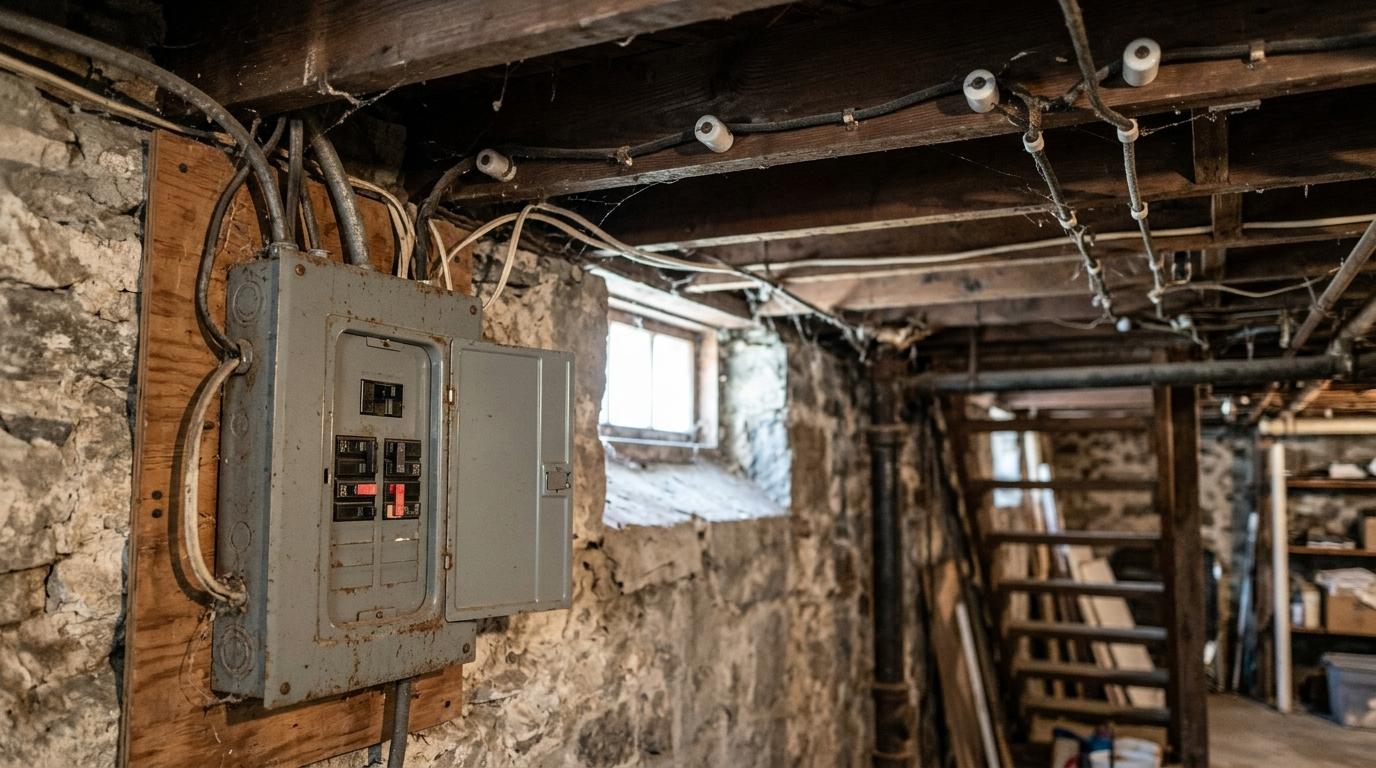
If you're house-hunting in Bourne, Sandwich, or anywhere down the Cape, you'll eventually walk into a home built between the 1890s and the 1950s. That's most of the housing stock in the older villages — and it comes with character, original trim, and sometimes wiring that predates the electric grid as we know it.
At SandersSystems LLC, I look at a lot of these homes. Two things come up again and again in my reports: Federal Pacific Electric (FPE) panels and knob-and-tube wiring. Both are worth understanding before you make an offer, negotiate a repair, or close on a house. Neither one is automatically a deal-breaker, but neither one is something you should ignore either.
This isn't a scare piece. It's a plain-language walkthrough of what these systems are, what inspectors look for, and the realistic paths forward.
Federal Pacific Electric Panels: Why They Get Flagged
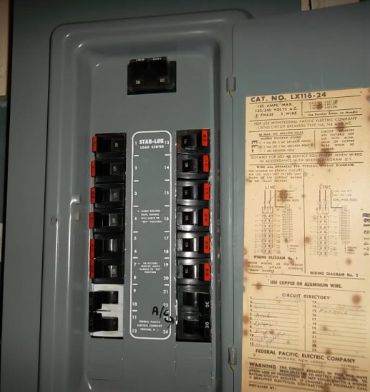
Federal Pacific Electric made breaker panels — most commonly the "Stab-Lok" line — that were installed in huge numbers from roughly the 1950s through the early 1980s. If your home was built or rewired in that window, there's a reasonable chance you have one.
What's the concern?
The breakers in these panels have a documented history of not tripping reliably when they should. A breaker that doesn't trip is a breaker that isn't doing its one job: cutting power when a circuit overloads or shorts. That doesn't mean every FPE panel will fail — it means the safety margin is narrower than it should be, and it's difficult to know the condition of an individual breaker just by looking at it.
What I check during an inspection
When I open a Federal Pacific panel in a Bourne or Cape Cod home, I'm looking at:
- Breaker fit and brand — mismatched breakers in an FPE panel are common and worth noting.
- Signs of overheating — discolored insulation, scorching, melted wire nuts, or a burnt smell.
- Double-tapped breakers — two wires under one terminal, which is a frequent shortcut.
- Missing or altered covers and dead fronts.
- Overall panel condition — rust, moisture intrusion, or amateur additions.
A visual inspection can tell you a lot, but it can't tell you whether a specific breaker will trip under load. That kind of testing is beyond the scope of a standard home inspection, and it's a job for a licensed electrician.
What homeowners usually do
Most buyers and sellers in this situation get a quote from a licensed electrician. Options typically range from replacing individual breakers to a full panel swap, and the right answer depends on the panel's condition, the home's amperage needs, and local code. I don't quote electrical work — I flag what I see and recommend you get a qualified electrician to evaluate it directly.
Knob-and-Tube Wiring: Old, But Not Automatically Dangerous
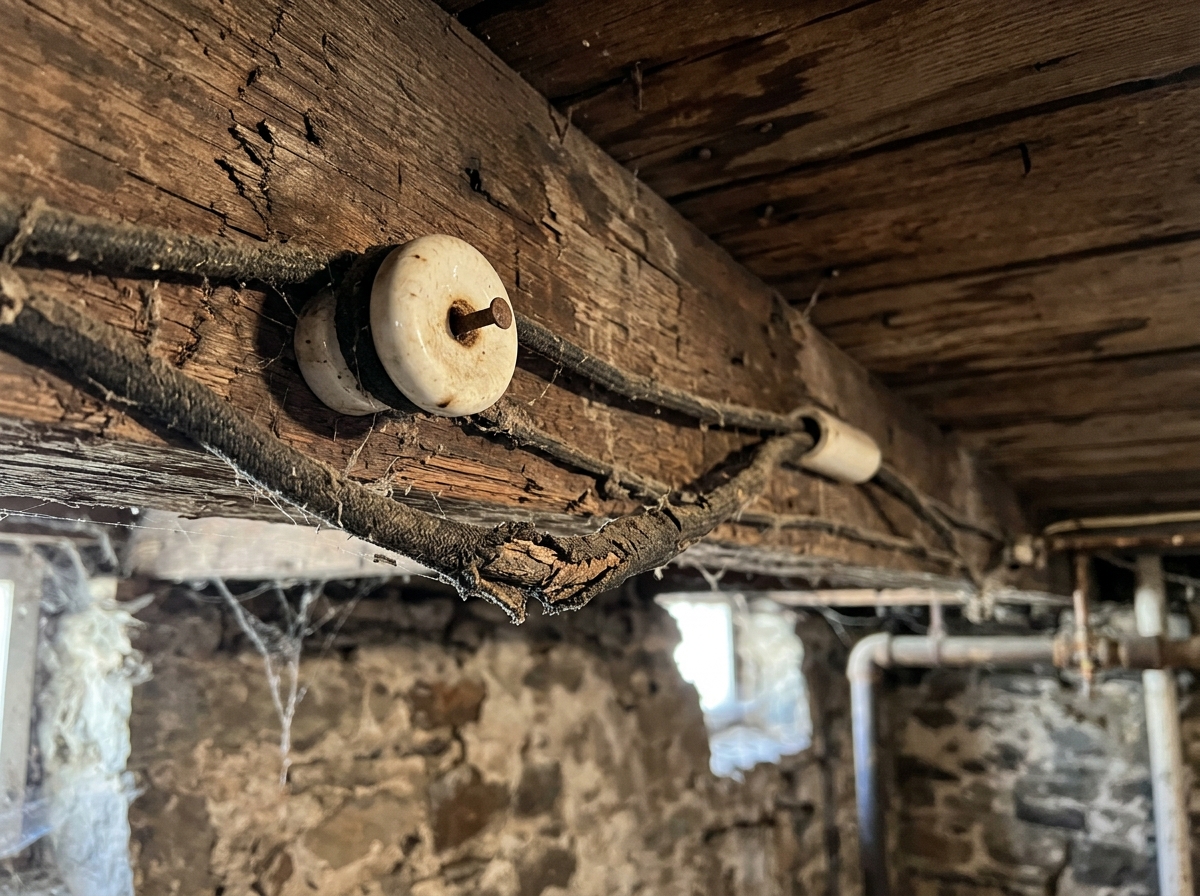
Knob-and-tube (K&T) wiring is the original residential electrical system — ceramic knobs stapled to joists, tubes through framing, and individual conductors running separately through the house. You'll find it in plenty of pre-1950 homes in Bourne, Pocasset, and the older parts of Falmouth and Wareham.
Why inspectors still flag it
K&T isn't inherently unsafe when it's intact and untouched. The problems come from what happens to it over decades:
- Brittle insulation — the cloth and rubber covering dries out and crumbles, especially in hot attics and damp basements.
- Buried in insulation — K&T was designed to run in open air, where heat can dissipate. When it's covered by modern blown-in insulation, it can't shed heat the way it was intended to.
- Amateur modifications — splicing modern Romex into K&T, adding outlets, or tying in a new circuit without understanding the system.
- No equipment ground — K&T has no ground conductor, which matters for modern appliances, electronics, and GFCI protection.
- Insurance complications — many insurers won't write a policy on a home with active K&T, or they'll require an inspection and upgrade first.
What I look for
During an inspection, I'm checking whether the K&T is still live, whether it's been modified, whether it's buried under insulation, and whether the visible runs show cracked or missing insulation. I'll also note where it feeds — a single original circuit to a bedroom light is a very different situation than K&T running the whole house.
The realistic paths
Some homeowners live with intact K&T and simply maintain it carefully. Others have it fully replaced. A middle path — rewiring the circuits that matter most, like kitchen, bath, and bedrooms — is also common. A licensed electrician should be the one to make that call after seeing the house in person.
What This Means for Buyers, Sellers, and Longtime Owners
The right response depends on which side of the transaction you're on.
If you're buying
Get an inspection before you commit. If FPE or K&T shows up, don't panic — but do get a licensed electrician's quote so you understand the real number. That quote becomes a negotiating tool, not a reason to walk. In a competitive Cape market, sellers sometimes pre-empt this by having the panel or wiring addressed before listing.
If you're selling
Disclose what you know. If you've had electrical work done, keep the permits and receipts. Buyers' inspectors will find FPE and K&T — it's not something that stays hidden — and a seller who's already done the homework tends to have a smoother transaction.
If you've owned the home for years
You may have lived with K&T or an FPE panel for decades without a problem. That's genuinely common. But age and heat take a toll, and a system that was fine ten years ago isn't guaranteed to be fine now. If you haven't had an electrician look at it in a while, it's worth scheduling.
One thing I want to be clear about: a home inspection is visual and limited in scope. I can't open walls, I can't test every breaker under load, and I can't predict the future. What I can do is document what's visible, explain what it likely means, and point you toward the right specialist.
Why Local Knowledge Matters on the Cape
Coastal Massachusetts is hard on houses. Salt air, humidity swings, and freeze-thaw cycles all take a toll on wiring, panels, and the connections inside them. A panel that looks fine in a dry climate can show corrosion here. K&T insulation that survived in a dry attic can crumble in a damp one.
That's part of why I spend so much time in crawlspaces, basements, and attics on the Cape and in SE Massachusetts — those are the places where electrical problems show themselves first. If you're looking at a home in Bourne, Sandwich, Mashpee, or anywhere nearby, the age of the housing stock means these issues come up regularly, and it helps to have an inspector who's seen them before.
Have Questions About Your Home's Wiring?
If you're buying, selling, or just want a clearer picture of what's behind your walls, SandersSystems LLC is here to help. I offer residential inspections starting at $625, with Premium and Premium Plus options if you want a more thorough look at a larger or older property.
I'm not going to tell you your house is unsafe or hand you a sales pitch. I'll walk the property, document what I find, and give you a straight answer about what deserves a closer look from a licensed electrician.
If you've got a specific question about FPE panels, knob-and-tube wiring, or anything else you've noticed in your home, reach out. I'm happy to talk it through before you decide whether an inspection makes sense for your situation.